Spring in Britain: Fresh Greens, Early Crops, and Lighter Plates
After months of root vegetables and heavy stews, March arrives with something worth getting genuinely excited about. The shift is gradual at first - a few bunches of watercress here, some early spring greens there - but by April and May, British markets and greengrocers are stocked with some of the best produce of the entire year.
What's in Season: March to May
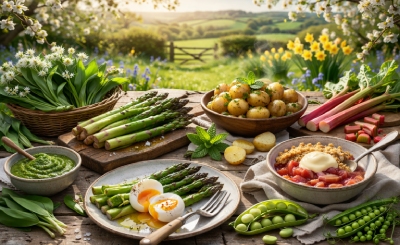
Asparagus is the star of the season, and there's no denying its arrival feels like a small annual event. British asparagus typically appears from late April and runs through June, grown mainly in Worcestershire and the Vale of Evesham. Roast it simply with olive oil and a little salt, or lay it alongside a soft-boiled egg for a quick lunch that needs nothing else.
Jersey Royal potatoes follow close behind. These small, waxy new potatoes have a distinctive earthy flavour that disappears once the season ends, so they're worth buying regularly while they're around. Boil them with mint and eat them warm.
Wild garlic grows in shaded woodland across the UK and starts appearing at farmers' markets from late March. The leaves are mild and versatile - fold them into soups, stir through butter, or blend into a simple sauce for pasta or fish.
Rhubarb moves from its forced, pale-pink indoor variety to outdoor-grown stems by April. It's tart and needs sweetening, but a simple crumble or compote takes very little effort.
Spring can feel short. Broad beans and early peas appear towards May and are gone quickly, so if you spot them fresh in a market, buy them. The season rewards people who pay attention.
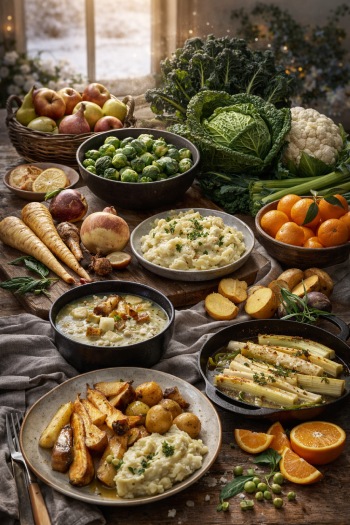
🍽Autumn in Britain: Orchards, Squash, and Hearty Cooking
September marks a genuine shift in the kitchen. The light salads of summer give way to roasting trays and bubbling pots, and the produce arriving at markets makes that transition feel entirely natural.
Fruit Worth Seeking Out
Orchards come into their own from late September through October. British apples and pears are at their best right now, and there's real variety to explore beyond the supermarket standards. Bramley apples are the classic choice for crumbles and pies, while dessert varieties like Cox and Egremont Russet reward eating straight from the bag. Plums and damsons appear earlier in September, sharp enough to make excellent jam or chutney. Blackberries grow wild along hedgerows well into October, and figs, where available from smaller British growers, are worth picking up before the season closes.
Vegetables Through September to November
Root vegetables start coming into their own. Beetroot, carrots, and onions store well and form the backbone of countless autumn dishes. Leeks arrive properly in October and stay reliable through November. Pumpkins and squashes peak around the same time, and they're genuinely versatile. Roast them with a little oil and spice, blitz them into soup, or use them to bulk out a stew.
Cabbage and kale round out the season. Both handle long cooking well, which suits the direction most home cooks naturally head as evenings get colder.
Mushrooms, whether foraged or shop-bought, add depth to autumn cooking in a way that's hard to replicate at other times of year. There's no denying it's a strong season overall. Game birds and shellfish also come into season now, for those who want to eat more broadly from the British calendar.
Eating Seasonally Makes British Food More Enjoyable
Whoever said that cooking to the season ought to sound like some cosmic intermediate-to-iron cookery late-night quiz challenge? Far from being boxed into a strict framework, it's all about simply picking up the freshest produce--which, more seasons than not, can be found at a fraction of a price. The earth itself has its best bounty to offer in each time of the year: the first tender greens and asparagus peep through in spring, then the summer is all about strawberries, raspberries, and courgettes; autumn brings apples, pears, and squash straight from the British orchards and fields; and winter presents a comfortable f about the only thing that's truly unwavering in this ever-changing world.
The soil will go on proliferating right through the fetal season with fall, while brassicas and roots pile upon one another all the way. Kick a few tires, bring your own shopping list to the market next time out, and allow wherever it is that grows round about you, in season right then, to ultimately organize what ends up on your plate. If you leave it at that, British cooking kind of sorts itself from there as well.